
How it works
Shoring and Temporary Support During Structural Removal
- shoring
- selective demolition
- structural
Published
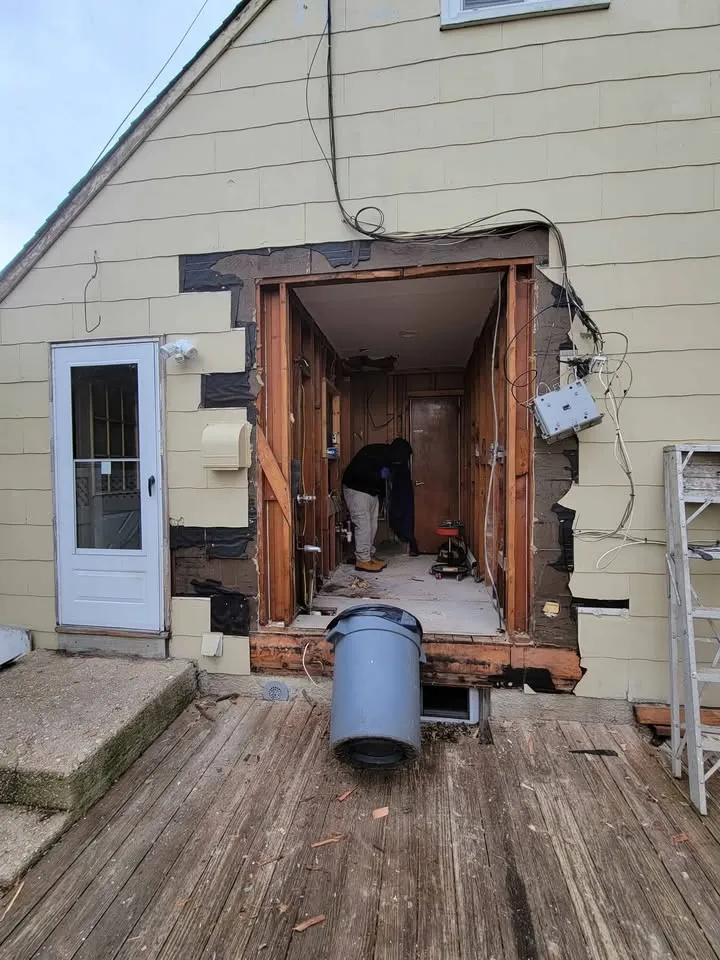
Take out a wall, a beam or a column and whatever it was holding up needs somewhere else to go. That's what shoring is for: temporary support that carries the load while the permanent structure's removed or replaced.
It shows up on more jobs than people expect, from a new opening in a house wall to a partial demolition of a commercial building. Here's how it works.
When shoring is needed
The common situations are:
- Removing or cutting into a load-bearing wall
- A new door or window opening in a bearing wall
- Partial demolition, where part of the building stays
- Excavating next to a neighbour's foundation
- Removing a beam or column before new steel goes in
What it looks like
On a house, it's often a temporary wall of studs and a beam either side of the wall being removed, or adjustable steel posts under a header. On bigger jobs, it can be engineered shoring towers, raking shores against a wall, or steel beams needled through the wall. The size depends on the load.
Who designs it
For straightforward residential work, shoring is often set up to standard practice. Anything bigger, or anything that's part of an engineered demolition plan, should be designed by a professional engineer. Ontario's construction regulation, O. Reg. 213/91, requires the structure to be kept stable during demolition, and shoring's often how that's done.
Putting it in and taking it out
Shoring goes in before anything's cut. The load's transferred to it, then the wall or beam comes out. It stays until the new support's in place and can carry the load, and only then is it removed, usually in the reverse order it went in.
It's checked along the way, especially after rain or freeze-thaw. Ground can move, and a post that was tight on Monday might not be on Thursday.
Common mistakes
The ones we see most: shoring sitting on a floor that can't take the point load, shoring removed before the new beam is fully fixed, and nobody checking it after a wet week. All three are avoidable.
When it makes sense to bring in a professional
If you're cutting into a wall and aren't sure whether it's bearing, stop and get it checked. That's a job for an engineer or an experienced contractor, not a guess. A selective demolition crew will look at it before cutting, and an interior demolition scope should say which walls stay.
Shoring on partial demolitions
Partial demolitions are where shoring earns its keep. When one part of a building comes down and another stays, the wall between them may suddenly be carrying loads it wasn't designed for, or losing support it relied on. Raking shores, braced frames or needled steel beams hold it until the new permanent structure's in. On these jobs, shoring's usually part of an engineered demolition plan.
Excavation next to neighbours
Shoring isn't only for walls. When a foundation's being removed or dug next to a neighbour's house, the soil holding up their footing needs support too. That can mean sloping the excavation back, benching it, or installing shoring along the edge. Your builder or engineer should confirm what's needed, and it's worth photographing the neighbour's foundation before work starts.
What to ask your contractor
Good answers to these questions don't have to be long. They just have to be clear, and they should match what's written in the scope.
Before a structural change starts, it's fair to ask:
- Is this wall or beam carrying load, and how do you know?
- What temporary support will go in, and who designed it?
- What's the shoring sitting on, and can that floor take it?
- When will the shoring come out, and who decides?
- Who checks it during the job, and how often?
Signs something's wrong
New cracks in drywall or plaster near the work, doors that start sticking, or a floor that feels different underfoot can all mean load's moving somewhere it shouldn't. Stop and get it checked.
In short
Shoring isn't glamorous, but it's what makes a structural change safe. If you're planning an opening or a partial removal in Vaughan, Steelpoint Demolition Vaughan can walk it with you and set out the support in the scope. Get your free estimate.
Frequently asked questions
- How do I know if a wall is load-bearing?
- You can't always tell by looking. An engineer or experienced contractor should check before any cutting.
- How long does shoring stay in?
- Until the new permanent support is fully installed and can carry the load.
- Does shoring need a permit?
- Shoring is usually part of the work covered by the building permit for the structural change.
- Can shoring damage floors?
- It can put heavy point loads on a floor, which is why spreader plates and a check of what's below matter.