
Materials
Clean Concrete vs Mixed Debris: Why Separation Matters
- concrete
- recycling
- debris
Published
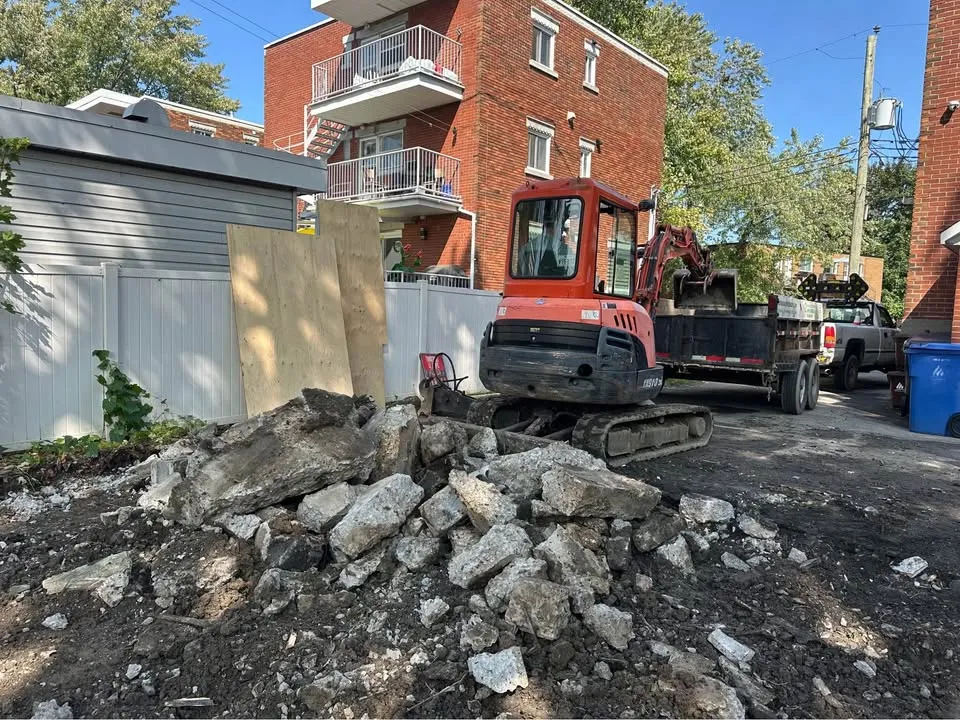
A pile of broken concrete and a pile of mixed demolition debris look a lot alike from the street. To a recycler, they're completely different things. One can be crushed and reused. The other usually can't.
Keeping them apart is one of the simplest decisions on a demolition, and one of the easiest to get wrong. Here's why it matters.
What clean concrete means
Clean concrete is concrete and, depending on the facility, masonry, without other stuff mixed in. Rebar's fine; it's pulled out by magnet at the crusher. What isn't fine is:
- Wood and lumber
- Drywall and plaster
- Plastic, insulation and roofing
- Soil and organics
- Garbage
Where each one goes
Clean concrete goes to a crushing facility and comes out as aggregate, which can be used as road base, fill or backfill. Mixed debris goes to a transfer station or landfill, where it's either sorted, which is slow, or buried.
How separation happens on site
It starts with the order of work. Interior finishes and wood come out before the concrete's broken. On a slab or pool deck, like the ones in our concrete removal photos, the breaker works on the concrete alone and the pieces are stacked on their own. On a house, the foundation's broken after the rest of the house is gone.
Space matters too. A tight lot might only fit one pile at a time, so loads have to go out as they're filled.
What can spoil a clean load
The most common problems are soil scooped up with the last of the concrete, a few boards thrown in at the end of the day, and painted or coated concrete that needs testing. Asbestos-containing materials, like some old cement products, are a separate matter entirely. They're identified in the designated substance survey required under section 30 of the Occupational Health and Safety Act and removed under O. Reg. 278/05 first.
Why owners should care
It's less material in landfill, and it's a good sign the job's being run properly. If a contractor can't keep concrete separate, it's worth asking what else they're mixing up. Steel's got a similar story, covered in where the steel goes.
When it makes sense to bring in a professional
If you've got a big slab, a pool deck, a foundation or a mix of concrete and other material, get a contractor to look at it before you book bins. They'll tell you whether it'll load as clean concrete and how much space they'll need. Junk and debris removal jobs benefit from the same approach.
Separation in practice
On a typical job, separation looks something like this:
- Soft strip first: finishes, wood and fixtures out before concrete work starts
- Concrete broken on its own, with no other material nearby
- Separate piles or bins for concrete, metal and mixed debris
- The last scoop of concrete taken carefully so it doesn't bring soil with it
- Loads checked before they leave the site
Asphalt, brick and block
Concrete's not the only hard material on a site. Asphalt from driveways is recycled on its own and shouldn't be mixed with concrete. Brick and block are accepted with concrete at some facilities and not at others, so it's worth checking before they're loaded together. When in doubt, keep them apart. It's easy to combine two clean piles later and impossible to un-mix one.
What it looks like on a residential job
It's also worth asking where each load is going before the job starts. A contractor who can name the facility for each type of material has usually thought the job through.
Take a typical backyard: an old patio, a set of concrete steps, a shed on a slab and a deck. Done well, the deck and shed come off first and go out as wood and metal. Then the patio, steps and slab are broken and loaded as clean concrete. Done badly, everything's knocked down together and goes out as one mixed load. Same yard, same work, very different result. The difference is just the order and a bit of care on the last scoop.
The bottom line
Separation's a small habit that makes a big difference. If you've got concrete coming out anywhere in Vaughan or York Region, Steelpoint Demolition Vaughan can look at it and plan the loads. Request a free estimate.
Frequently asked questions
- Is brick accepted as clean concrete?
- Some facilities accept concrete and masonry together, others want them separate. It depends on the facility.
- Does rebar need to be removed on site?
- Not always. Many crushers remove it by magnet, but large pieces are often cut out on site.
- What happens if a clean load has wood in it?
- The facility may reject it or treat it as mixed debris.
- Can crushed concrete come back to my site?
- Sometimes, as base or fill, if it meets your builder's or engineer's requirements.