
Materials
Where the Steel Goes: Scrap Recovery on a Structural Demolition
- scrap steel
- recycling
- structural demolition
Published
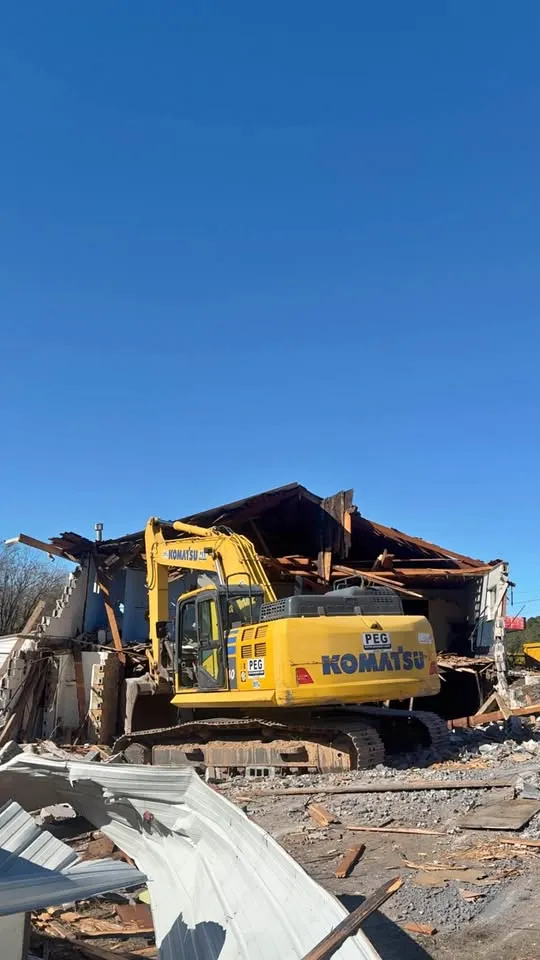
Steel's one of the few things on a demolition that's worth more out of the building than in it. Beams, columns, decking, cladding, ductwork and rebar can all go to a scrap recycler, and most of it ends up as new steel.
But none of that happens by accident. Good scrap recovery comes down to how the job is planned and how carefully the crew separates as they go. Here's how it works.
What counts as scrap on a demolition
It's more than beams. On a typical structural job, you'll see:
- Structural steel: beams, columns, joists and bracing
- Roof and floor decking
- Metal cladding and siding, like the panels you'll see in teardown photos
- Rebar and wire mesh pulled from concrete
- Ductwork, piping and electrical conduit
- Copper wiring and aluminum, which are graded separately
Separating as it comes down
The easiest pile to sort is the one you never mix. On a well-planned job, the operator pulls steel out as the building comes apart and sets it on its own pile. Cladding comes off before the frame, so it doesn't get buried in wood and drywall.
Once metal's mixed into a big pile of debris, it's slow and messy to get back out, and some of it won't be.
Cutting to size
Long beams and columns usually have to be cut down so they fit in a bin or trailer and meet the recycler's size limits. That's done with shears on the excavator or with torches, depending on the steel. Torch cutting on painted steel needs care, since old paint can contain lead, and that's something the designated substance survey should have flagged.
What stops steel being recovered
A few things get in the way:
- Contamination, like asbestos-containing insulation still attached, which has to be removed under O. Reg. 278/05 first
- Tight sites without space for a separate pile
- Mixing during demolition, so the steel's buried in debris
- Coatings or attachments the recycler won't accept
Why it matters to the owner
It keeps a lot of material out of landfill, and that's reason enough for most owners. It also cuts down the volume of mixed debris that has to be trucked and tipped. There's a similar story with concrete, which we cover in clean concrete vs mixed debris.
When it makes sense to bring in a professional
If your building has a steel frame, large metal cladding, or old process equipment, it's worth having a contractor look at it before it's tendered. They'll tell you how much space they'll need for separation and whether anything on the steel needs dealing with first. For industrial units, that walk usually starts with a commercial strip-out of racking and equipment.
Loading and hauling
Scrap doesn't load like mixed debris. Steel's heavy for its size, so trailers and bins fill by weight long before they look full. Long pieces are laid flat and kept inside the box, and loose items like conduit and ductwork are loaded so nothing can shift on the road. Where there's room, a dedicated scrap bin sits on site for the whole job, and it's swapped when it's full.
Salvage vs scrap
Not everything has to go to the recycler. Some items are worth more reused than melted down:
- Steel beams in good condition, which can sometimes be reused on other projects
- Racking and shelving from industrial units
- Doors, frames and hardware
- Equipment the owner plans to sell or move
Safety around steel
Ask your contractor how they'll handle steel before the job starts. A clear answer usually means a well-planned demolition.
Cutting and handling steel brings its own hazards. Long members can spring or roll when they're cut free, so they're supported or lowered by machine rather than dropped. Torch cutting needs a fire watch and a clear area, and cut edges are sharp. None of it's unusual, but it's why steel recovery is planned into the sequence rather than done as a clean-up at the end.
Wrapping up
Scrap recovery isn't a separate job. It's a way of running the demolition, and it starts with the sequence. If you've got a steel-framed building in Concord, Woodbridge or anywhere in Vaughan, Steelpoint Demolition Vaughan can walk it with you and plan the separation into the structural demolition scope. Request a free estimate to start.
Fixtures need a destination decision too
An office partition or fixed fixture intended for reuse needs an agreed recipient and suitable handling arrangement before it is placed in the ordinary removal inventory. Apparent condition does not guarantee intact salvage or value. Compare retention, specialist relocation and demolition, then keep the accepted demolition and recovery packages distinct.
Frequently asked questions
- Is all steel from a demolition recyclable?
- Most of it is, as long as it isn't contaminated or coated with something the recycler won't take.
- Does rebar get recycled?
- Yes. It's cut out on site or pulled by magnet when the concrete is crushed.
- What about copper and aluminum?
- They're separated from steel and graded on their own.
- Can painted steel be recycled?
- Usually, yes, but old paint may contain lead, which affects how it's cut. The designated substance survey should say.